Earbuds buying guide for Pakistan: ANC, codecs, battery, fit and fakes
ANC, ENC, LDAC, IP54, “40 hours”: what each earbud spec really means for your phone and your ears, and how to check AirPods with Apple’s own tools.
Mobile Sahab · 7 min read
Earbud boxes are full of big words: ANC, ENC, LDAC, “40 hours”, “game mode”, IPX4. Some matter a lot, some only matter with the right phone, and some are written to sell. This earbuds buying guide explains each one in plain words, checked against the brands’ own support pages, so you can pick a pair that suits your phone, your ears and your day. Pehle samjhiye, phir kharidiye.
ANC vs ENC: the two “noise” features are different
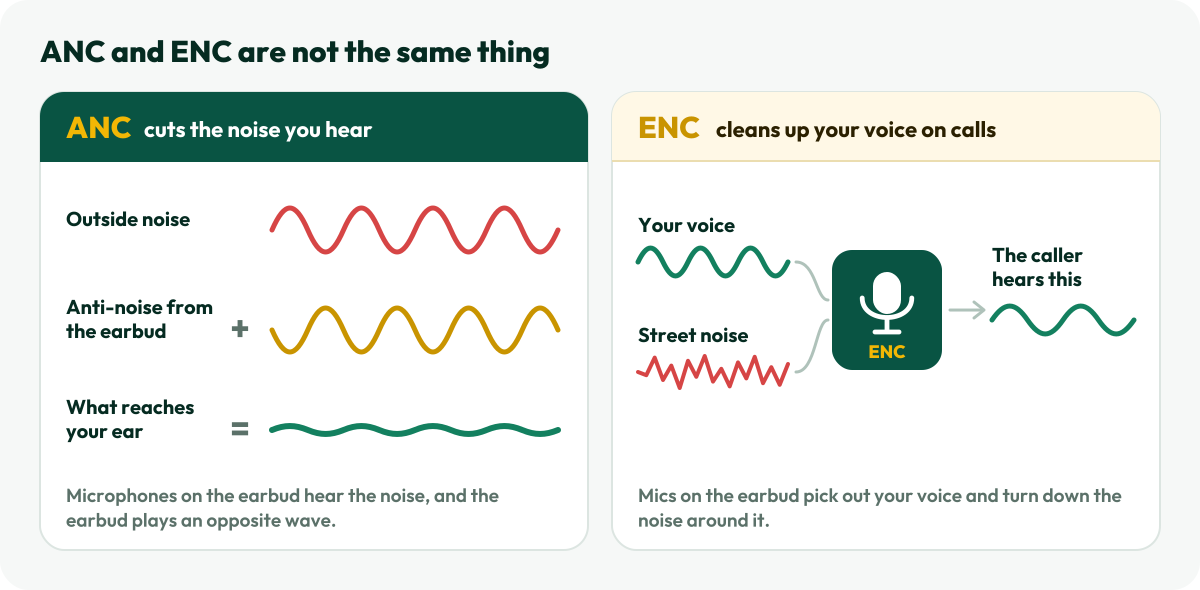
ANC (active noise cancellation) changes what you hear. Microphones on the outside of the earbud pick up outside noise, and the earbud plays “anti-noise” to cancel it before it reaches your ear, while a microphone inside listens for what is left (Apple). Sony notes that noise cancelling works mainly on low-frequency sound such as vehicles and air conditioning, and reduces it rather than removing it (Sony). Bus engines, generator hum and aeroplane cabins are where it shines. Many ANC earbuds, including AirPods Pro and Sony’s, also have a transparency or ambient mode that does the opposite: it lets outside sound in, so you can hear traffic without taking the earbuds out.
ENC (environmental noise cancellation) is about calls. Soundcore describes it as isolating your voice from background noise, so it is the other person who hears less of your street (Soundcore). When a box lists ENC but not ANC, expect clearer calls, not quieter music.
ANC is about what you hear. ENC is about what the person on the other end of the call hears.
Bluetooth codecs: what matters for Android and iPhone
A codec is how music is packed to travel over Bluetooth. The Bluetooth audio specification makes SBC mandatory, so every pair works with every phone. The rest are extras:
Bluetooth’s newer codec: SBC-level quality at under half the bitrate (Bluetooth SIG)
Android 8.0 and later include AAC, aptX, aptX HD and LDAC alongside SBC, and the phone uses the best codec that both sides support (Android Open Source Project). So a codec only helps when both the phone and the earbuds list it.
On an iPhone, AAC is the one that matters: Apple says AirPods use its AAC codec, and also that Bluetooth connections aren’t lossless (Apple). Apple doesn’t list aptX or LDAC for iPhone, so paying extra for them only makes sense with an Android phone that supports them.
Latency and gaming mode
Latency is the delay between something happening on screen and the sound reaching your ears. It matters most in games, where footsteps and gunshots need to land on time.
Some earbuds offer a game or low-latency mode. Samsung’s Gaming mode adjusts the audio delay on Galaxy Buds+ and newer, but only with a Samsung phone through the Galaxy Wearable app (Samsung). realme quotes 40 ms in Game Mode for its Buds Air 5 Pro, measured in its own lab, and adds that results depend on the test environment (realme). Treat any latency figure as a best case.
Battery life: read the small print
Battery figures are real, but they are measured under the brand’s own conditions. Apple rates AirPods Pro 3 at up to 8 hours with noise cancellation on at 50% volume, and adds that battery life depends on settings, environment and usage (Apple). Two things to look for:
Earbuds or total? The big number on the box is often the earbuds plus the charging case. What you get in one go is the earbuds-only figure.
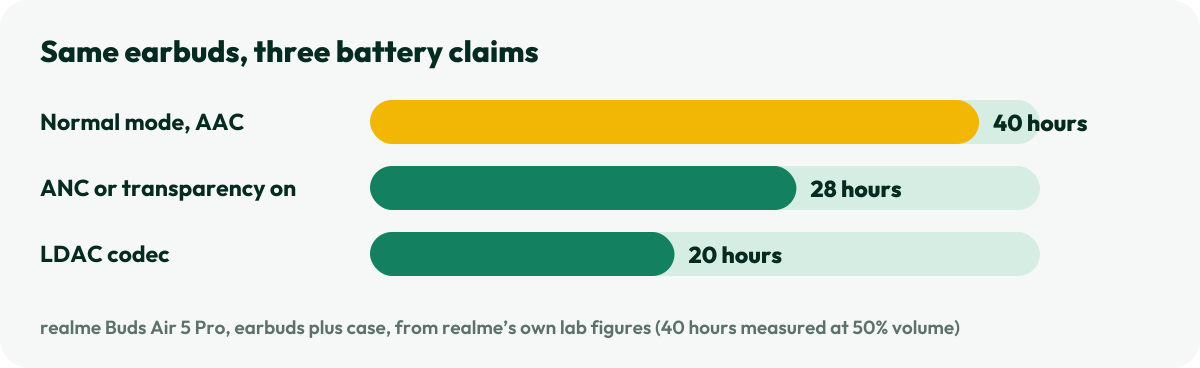
Which mode? Noise cancelling and high-bitrate codecs use more power, as realme’s own figures show.
One pair of earbuds, three honest numbers. Always read which mode the big one was measured in.
IP ratings: sweat, rain and water
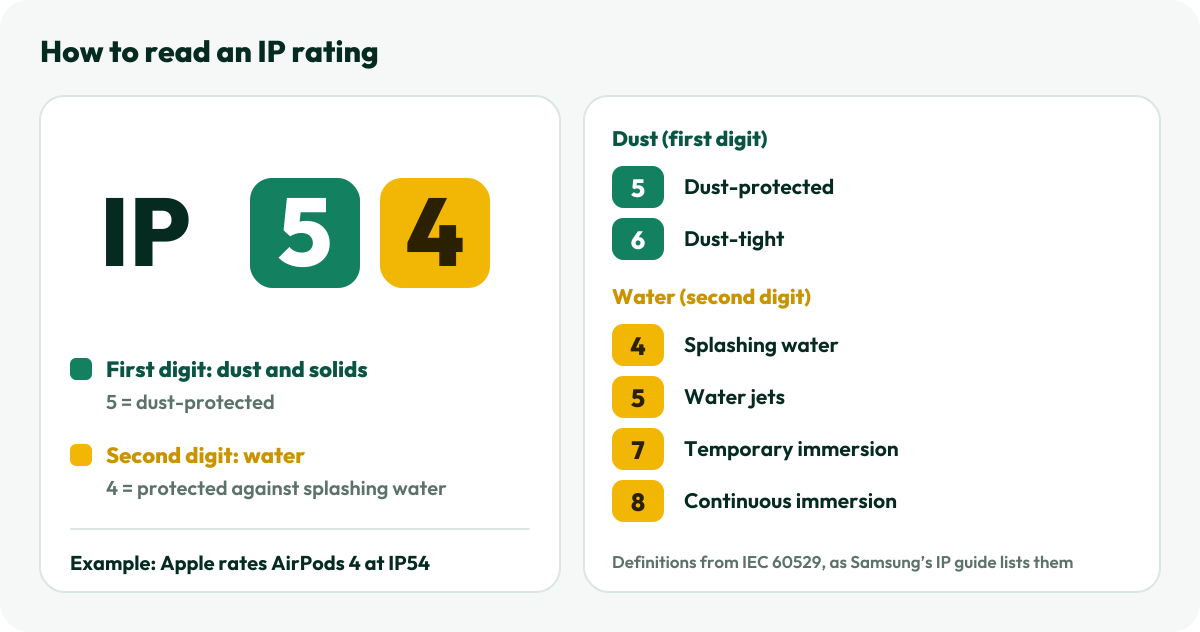
An IP rating, from the IEC 60529 standard, tells you how well a product resists dust and water. The first digit is dust and the second is water (Samsung). You will often see IPX4, which Sony describes for its earbuds as protection against water splashing from any direction.
IP54 means dust-protected and protected against splashing water. No rating means no promise at all.
Three cautions from the brands themselves:
Apple says AirPods are sweat and water resistant but not waterproof, that this resistance can diminish over time, and that they aren’t made for swimming or showering (Apple).
Samsung says its IP57 Galaxy Buds3 and Buds3 Pro can handle fresh water up to 1 metre for 30 minutes, and that the rating applies to fresh water only (Samsung).
The case may not share the rating: Sony says the charging case of its IPX4 WF-1000XM4 is not water resistant (Sony).
Fit and ear tips: the free upgrade
Earbuds that don’t seal well don’t cancel noise well either. Apple says ANC and transparency work best when AirPods Pro fit well, and its Ear Tip Fit Test (the Acoustic Seal Test on AirPods Pro 3 with iOS 26) checks the seal (Apple). Samsung’s Earbud fit test does the same on Galaxy Buds2, Buds2 Pro, Buds3 Pro and Buds4 Pro (Samsung).
Try every tip size in the box, and don’t assume both ears take the same size: Apple says you might need a different size for each ear.
Spotting fake AirPods and Galaxy Buds
Copies of popular earbuds can look very close to the real thing, so check with the brand’s own tools, not a seller’s word.
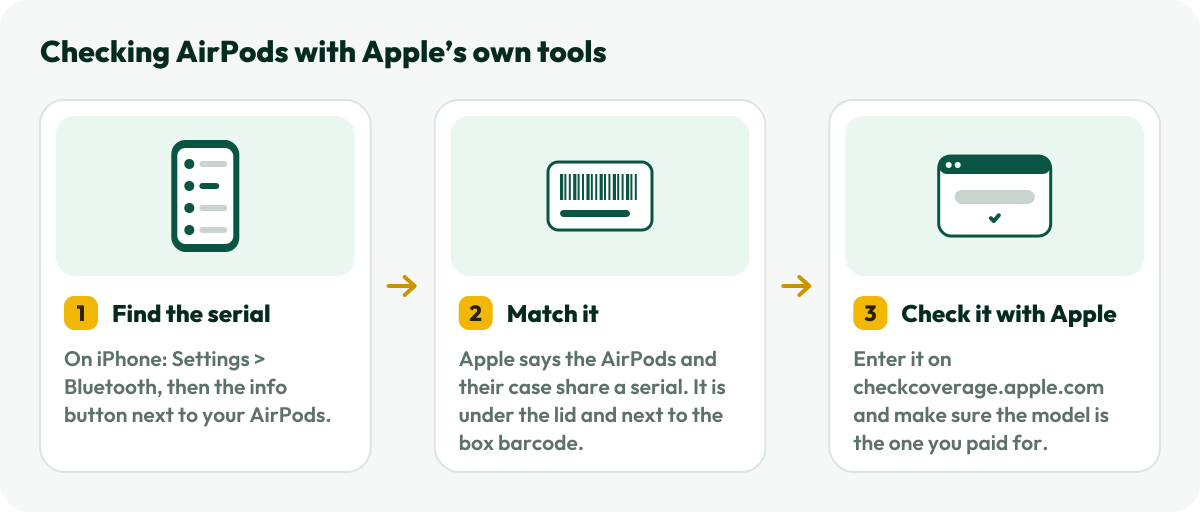
For AirPods, Apple lists three places to find the serial number: Settings > Bluetooth (tap the info button next to your AirPods), the underside of the charging case lid, and next to the barcode on the original box. Apple also says the AirPods and their case share a serial number (Apple). Enter it on Apple’s coverage page and make sure the model is the one you paid for.
Only use Apple’s own pages and settings for this check, never a link sent by a seller.
A mismatch anywhere is a reason to walk away. A match is a good sign, but no check from a distance is perfect, so the seller still matters.
For Galaxy Buds, we could not find a public genuine-check tool on Samsung’s website. Samsung’s Pakistan warranty terms do say the warranty doesn’t apply to products not bought from an authorised Samsung dealer (Samsung Pakistan), so buy from a seller who gives you an invoice and the official warranty. Every pair in our earbuds range is genuine, comes with an invoice and the brand’s official warranty wherever the brand provides one, and is checked before dispatch.
How to choose: a quick checklist
If you…
Look for
Watch out for
Use an iPhone
AAC and a good fit
Paying extra for aptX or LDAC
Use Android and care about sound
LDAC or aptX, if your phone lists it
A codec your phone doesn’t support
Commute or work in noise
ANC with a transparency mode
ENC sold as if it were ANC
Take a lot of calls
ENC or another call-noise feature
Earbuds with no call feature listed
Game on your phone
A game or low-latency mode
A game mode that needs another brand’s phone
Sweat at the gym or walk in the rain
An IP rating with a water digit of 4 or more
Showering or swimming with them
Switch between phone and laptop
Multipoint: two devices connected at once
Assuming every pair can do it
Frequently asked questions
Is ANC worth it in Pakistan?
If you ride buses or rickshaws, sit near generators or AC units, or fly, yes: steady low-frequency noise is what ANC handles best. In a quiet room, Sony itself says the effect may not be pronounced.
Do I need LDAC or aptX with an iPhone?
No. Apple’s own earbuds use AAC, and Apple doesn’t list aptX or LDAC for iPhone, so AAC is the codec to look for.
Can I shower or swim with IP57 earbuds?
Don’t. Apple says AirPods aren’t made for swimming or showering, and Samsung’s IP57 rating for Galaxy Buds3 covers fresh water only.
How do I know if my AirPods are original?
Find the serial in Settings > Bluetooth, match it with the case lid and the box, and check it on Apple’s coverage page. Any mismatch is a red flag.
About Mobile Sahab
MobileSahab is an online phone store in Lahore that sells only new, box-packed, PTA-approved phones and genuine accessories. Our guides come from what we check every day before dispatch: IMEIs on PTA’s DIRBS system, seals and warranty cards, and chargers and cables we test ourselves.
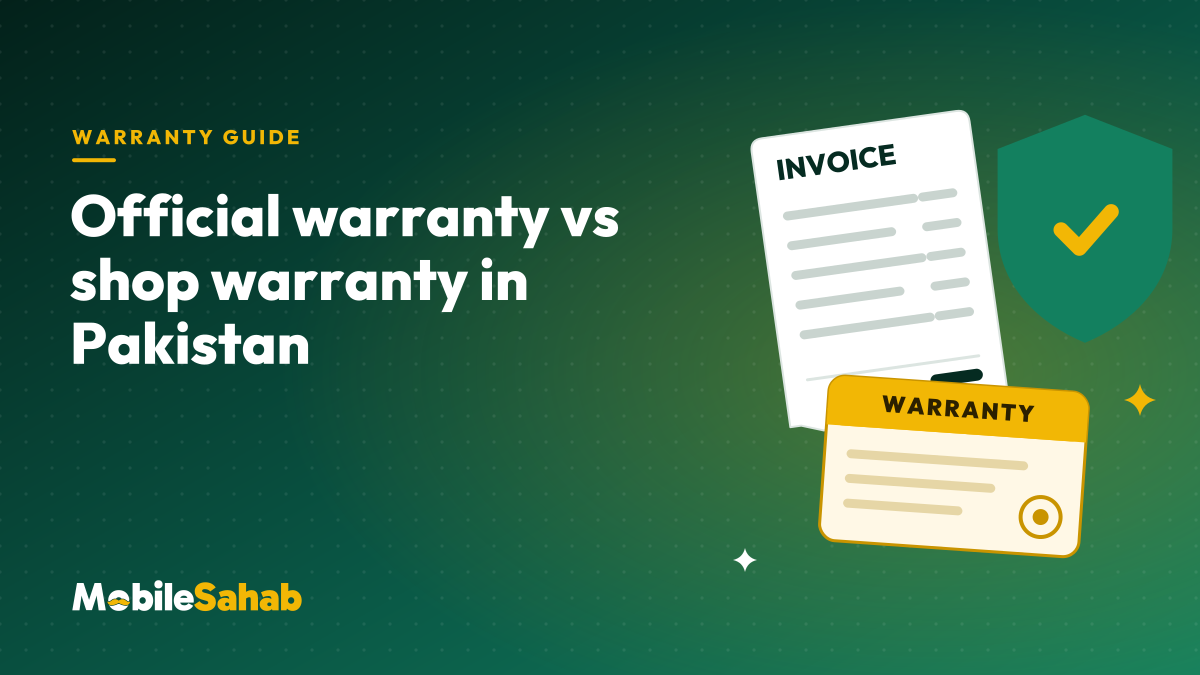
A shop’s stamp and a brand’s warranty are different promises. Here is what each covers, where to check a phone’s warranty on the brand’s own site, and how to claim.
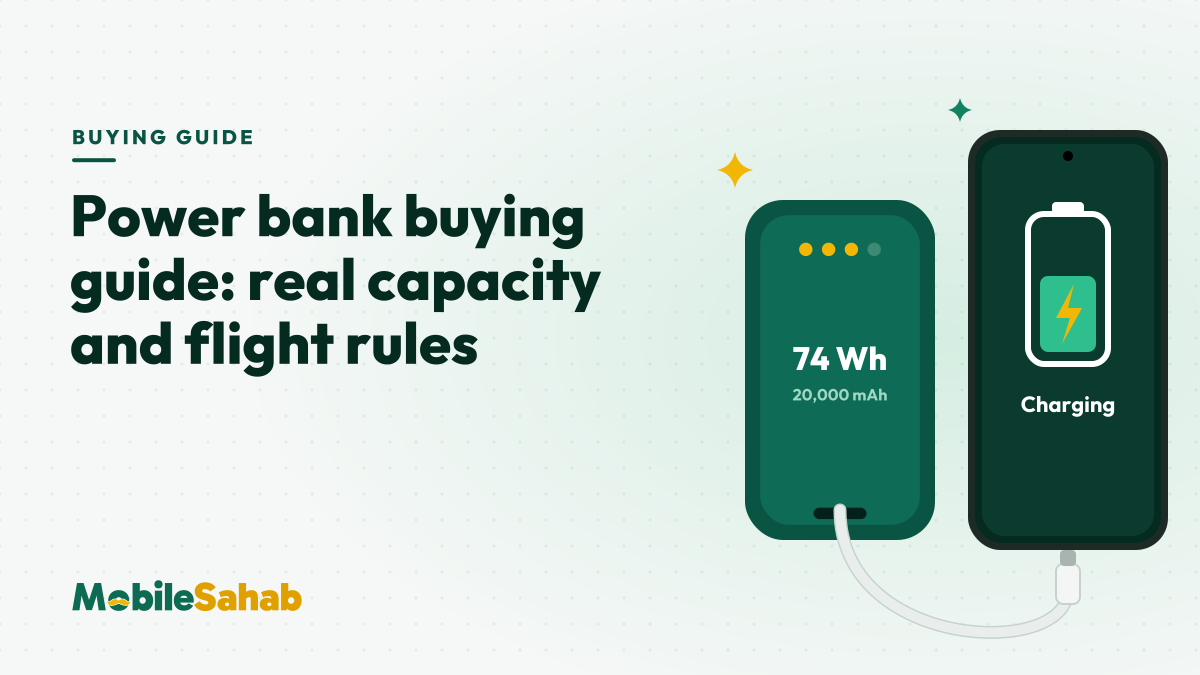
The mAh on the box is counted at 3.7 V, not at the 5 V your phone gets. Here is the real arithmetic, plus fast-charge support, safety and the 2026 rules for flying.